
5 minute read
Indestructible, invisible, and wreaking widespread havoc—and no, I’m not talking about the newest Marvel supervillain. Meet PFAS, the aptly named “forever chemicals” that will outlive us all. Per- and polyfluoroalkyl substances (PFAS) are man-made toxins that earn their name “forever chemicals” because of their inability to break down over time and dissolve in water.
Since the mid-1900s, thousands of PFAS have been manufactured and used commercially, but until recently, little research had been performed on their potential for bioaccumulation and toxicity. With seemingly little public awareness of PFAS and their effect on the environment and communities, it raises the question: Why should we care, and what can we do?

PFAS and the Environment
Recent studies have shed light on the accumulation of these chemicals in waterways and marine environments that pose risks not only to marine life, but to many coastal and island communities. A study published by the American Chemical Society found that both short- and long-chain PFAS were detected in seawater across all five major oceans, with accumulation occurring even in remote areas of the Arctic. Many small marine species that occupy the seafloor, such as plankton and shellfish, are vulnerable to PFAS buildup in their flesh due to bottom-feeding habits. Larger species that ingest these smaller species then accumulate these chemicals in their systems, causing a spread of these chemicals throughout marine food webs.
Studies being performed in coastal areas such as Rhode Island can be insightful when shedding light on the “Bigger Picture” of PFAS and their effects on marine and coastal communities. The State of Rhode Island Department of Environmental Management released the “Statewide PFAS Source Investigation Report” in November 2023, where it identified six major sources of contamination in the state, including which were Department of Defense sites, landfills and wastewater treatment facilities. In 2022, the state passed a law requiring water systems to test for PFAS and report their data to the Department of Health. The investigation report showed that eleven water systems in the state exceeded the standard concentration of 20 parts per trillion, with one system notably containing an excess of 70 parts per trillion.
That same year, a comprehensive study performed by the US Environmental Protection Agency on PFAS on the coastal food web of the U.S North Atlantic examined 18 marine species in Narraganset Bay, Rhode Island and found the presence and concentration of 19 different target PFAS.
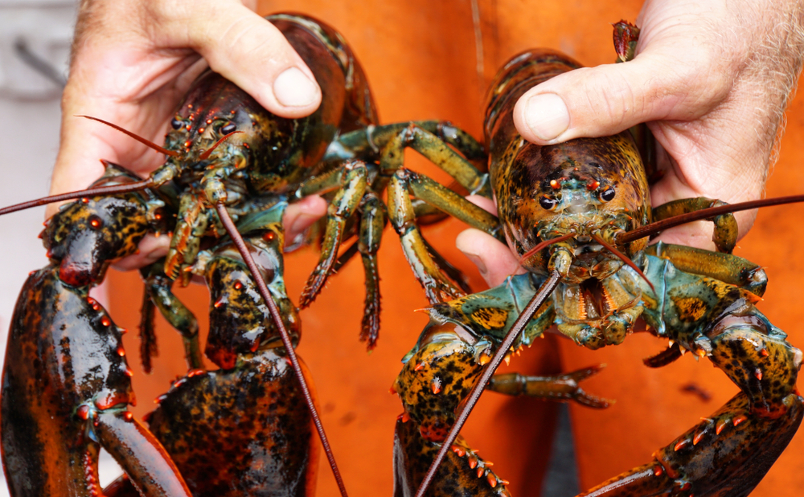
In this study, species such as American lobsters, cancer crabs, bluefish and striped bass showed high concentrations of PFAS in their tissue, with American lobsters showing the highest average accumulation in individuals. The species examined in this study can be used to reflect the diversity of a typical North Atlantic Ocean food web, giving a “Big Picture” insight into the larger-scale impact on coastal and island communities affected by these chemicals.
PFAS and Human Health
Due to the accumulation and widespread contamination of these toxic chemicals, it’s important to advocate for coastal and island communities that will feel its adverse health and environmental effects. While Fish Consumption Advisories for waters contaminated with PFAS have only popped up within the last decade, there has been a rise in urgency due to how widespread PFAS have now become. Additionally, most research and consumption advisories are carried out regarding freshwater species, which are not as commonly consumed as saltwater species. This gap in research can limit the effectiveness of public health guidelines that help establish what limit of seafood is safe for consumption. In humans, we see an association between PFAS and diseases like cancer, high cholesterol, hormonal interference, reproductive disorders and fetal abnormalities, and surveys have shown that most people within the U.S experience some level of exposures to PFAS.
A study led by researchers from Harvard T.H. Chan School of Public Health also showed higher levels of exposure to harmful levels of PFAS in communities of color (POC) when in comparison to other communities. Using data from 7,873 U.S. community water systems across 18 states, such as California, Maine, New York and Massachusetts, this study found that around 25% of the population in the states researched had community water systems containing PFAS levels of about 5ng/L, with the EPA’s standard level being defined as 4 ng/L. Results from this study show that socioeconomic factors, such as poverty or experiencing disinvestment and infrastructural racism, makes these communities statistically more likely to be exposed to harmful levels of PFAS.
What Next?
While these studies have yielded interesting and important results, more research on the effects of PFAS should be carried out to get a full understanding of their harm not only to the environment, but to communities and individuals. Improvements to legal frameworks, new policies and improved marine environment management are vital for preventing irreversible damage to these ecosystems and communities. Additionally, coastal states should invest in education and public service announcements about the dangers of PFAS levels.

About the Author: Kathy Sederback is a student at the University of Rhode Island, majoring in forensic chemistry. She is interested in the application of science into the field of anthropology and exploring ways to utilize chemistry in environmental and social justice.
This article was written for MAF/APG471_Sp25, I attest that I am the author of this article and have responsibly referenced my sources throughout the article. I have given Prof. Lloréns permission to publish it on her website.
 hildallorens.com