
5 minute read
Everyday islands around the world receive large cruise ships carrying thousands of passengers. But how sustainable is it for island nations to economically depend on cruise ship tourism at a time of unprecedented climate change and environmental degradation that is, in part, a byproduct of the tourism industry itself?
The Caribbean and the Mediterranean are the world’s leading markets for cruise ship tourism. In his article titled “Environmental Impacts of Cruise Ships on Island Nations,” Daniel Moscovici explains that island nations that depend on tourism prioritize short-term economic gain over the long-term protection of their environment.
Can cruise ship tourism be sustainable?
Ecotourism or sustainable tourism is both a marketing strategy and a set of practices adopted by the tourism industry to attract climate- and environmentally-conscious tourists. International tourism offers an economic boom to island nations around the world, but it adds environmental pressures and harms local ecosystems. From the perspective of protecting the environment, it seems that cruise ship tourism is an unsustainable economic gamble for island nations.
Massive cruise ships emit large amounts of carbon emissions, which impact global air quality. In “Can the Large Cruise Ships Drive Systemic Change in Maritime Sustainability?” Inemesit Ukpanah explains, that “on average, cruise ships and other maritime vessels account for about 3% of greenhouse gas emissions yearly. A cruise ship emits 250g of CO2 per passenger kilometer traveled.” These greenhouse gases contribute to climate change. Additionally, because human and environmental health are interconnected, cruise ship air pollution leads to respiratory and cardiovascular diseases among receiving populations.
Cruise ships dumping sewage into the ocean harm island ecosystems and marine life. On average, according to Anna Baxter in “Oceana Works to Stop Cruise Ship Pollution,” “Thirty thousand gallons of sewage are dumped into the oceans every day by an average-sized cruise ship with three thousand passengers and crew.” Sewage contains chemicals and plastics which can harm coral reefs and create dead zones. Dumping also affects the health of fish stocks. Like air pollution, cruise ship waste dumping, and mass tourism on small islands affect water sources, ocean fish stocks, and the livelihoods of fishers, as well as the local people’s health.
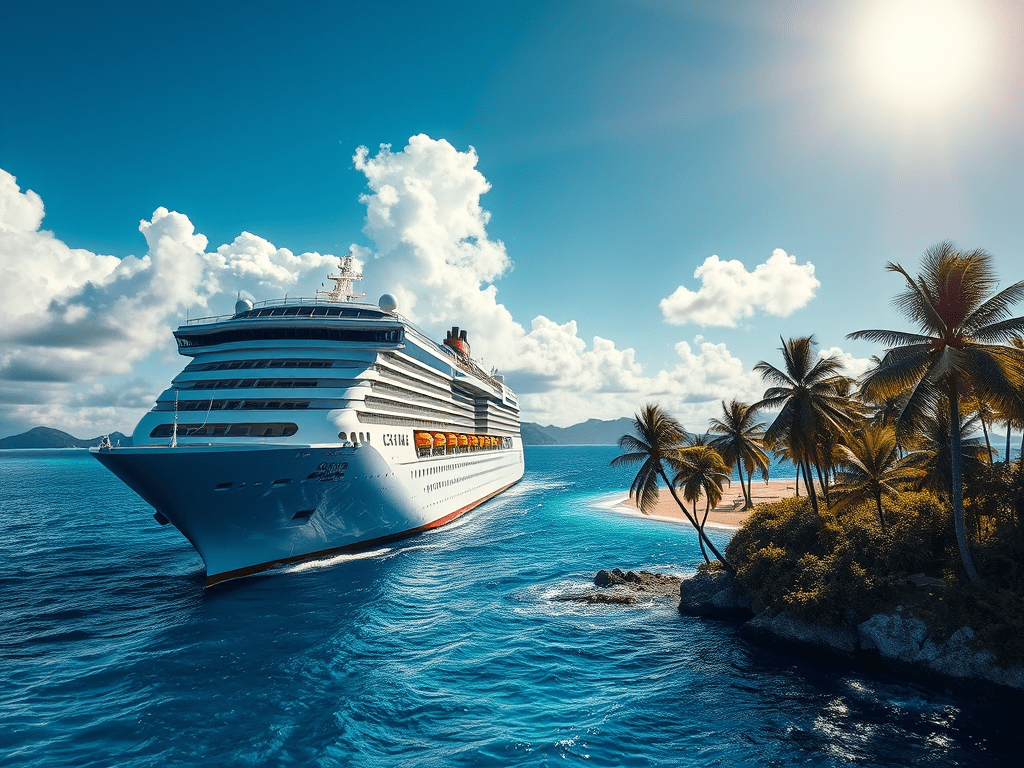
AI generated image for this article.
Tourism Marketing, Economics, and Environmental Impacts
In “Tourism in the Anthropocene Park,” Amelia Moore details that visitors view the Bahamian islands as a dream vacation destination. It is well known as a global tourism hotspot. Nowadays, social media is used as a marketing strategy to lure tourists to this dream destination, picturing the clear waters, beaches, and other relaxing aspects to grab people’s attention and draw them to one of the islands. Tourism on these islands is a form of development that has been promoted as a major source of economic revenue for its citizens.
But as is explained in “The cost of traveling on the edge: Island Nations face the rising tide,” “A one-meter increase in sea levels, combined with a category five hurricane, could threaten 83% of tourism infrastructure.” The authors of this study conclude that climate change could lead to a “significant loss in revenue and employment” for residents of islands. This combination would be catastrophic for local people who depend on the tourism industry. Additionally, destroyed infrastructure will potentially stop people from visiting island nations, which would then have major negative effects on the livelihoods and economy of local people.
Cruise-ship Tourism’s Effects on Culture and Marine Life
Cruise ship tourism’s economic gains have many negative impacts on the local environment and contribute to climate change. Specifically, environmental impacts include air, water, light, and noise pollution, high amounts of carbon emissions, dumping waste into the ocean, and collisions with marine mammals.
Islands’ fish stocks and other marine life in the Montenegrin Bay are impacted by tourism from cruise ships. As Matija Otasevic explains in “Crowded with Cruise Ships, Fears for Montenegrin Bay,” the number of cruise ships bringing mass tourism to the islands has contributed to residents moving away and to the depletion of marine life. “They…destroy the fishing nets along their routes and the marine environment because of cleaning the vessels and discharging the wastewater.” These cruise ships are damaging the local environment all for the tourists’ enjoyment.
Dolphins and whales are also dealing with the noise pollution from these massive cruise ships. The noise emitted by these large vessels affects their sonar and underwater communication. The tourists’ “dream vacation” is not sustainable for the human and animal inhabitants and for the long-term environmental health of these areas.
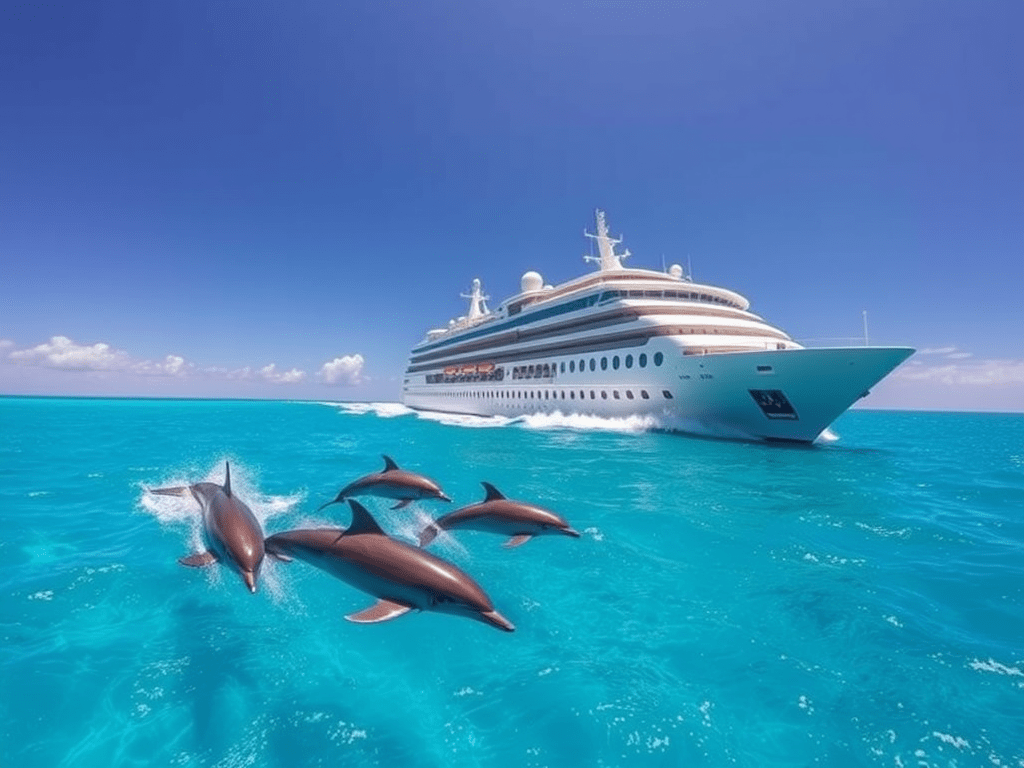
AI generated image for this article.
Cruise ship tourism can also contribute to diminishing an island’s native culture, which is a major phenomenon in the Caribbean. The blog post titled, “Understanding the Impact of Cruise Ships on the Caribbean,” published in TripCast360, states that “increasing commercialization of the region has eroded some of this authenticity. The homogenization of tourist attractions and experiences can lead to a loss of cultural diversity and can diminish the appeal of the region as unique and authentic destinations.” In promoting resources and “dream vacations” to tourists, an island’s authentic cultures are hidden from view, making them unknown to the visitors. It is important to mention that not all visitors are tourists; some are travelers, and the latter seek to learn about local culture, people, food, and experiences.
Cruise ship tourism is popular. But despite the economic gains, these islands are vulnerable, and this industry harms the already unstable environment. As someone from the Global North, it’s hard to understand that something we take for granted as a “simple decision” to take a vacation can cause so much unrecognized harm all around. After realizing these negative effects, the question remains the same: how can cruise ship tourism be made sustainable for the environment, the receiving communities, and the economy?
About the author: Megan Ayotte is a junior, majoring in Marine Affairs and minoring in Oceanography at the University of Rhode Island.
This article was written for MAF/APG 471_Sp25, I attest that I am the author of this article and have responsibly referenced my sources throughout the article. I have given Professor Lloréns permission to publish it on her website.
 hildallorens.com