5 minute read
The Gulf of Maine’s waters are warming faster than 99% of the world’s oceans, making it a critically endangered site as a result of climate change. The Gulf of Maine is home to Cashes Ledge, a unique underwater mountain range and biodiversity hotspot, known as the “Yellowstone of the North Atlantic.” Cashes Ledge has the deepest and densest kelp forest in the Atlantic.
Cashes Ledge is an essential marine ecosystem that provides biodiversity, ecosystem resilience, economic value, and plays a role in climate regulation. This area is one of the most abundant and productive marine life areas in New England, contributing to the overall health of the Gulf of Maine. It is home to a large variety of marine species that are significant to New England’s economy.
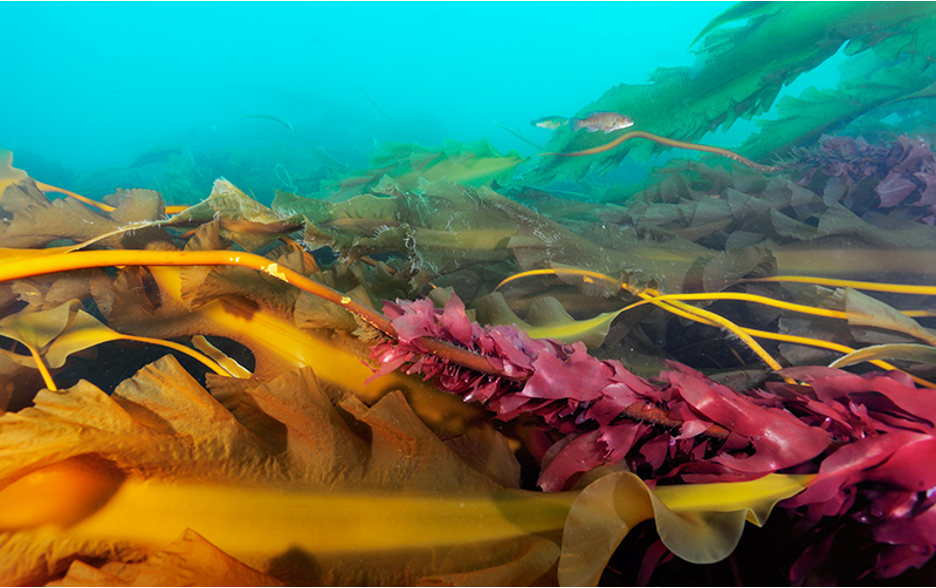
Species like cod, lobster, crabs, and many more thrive there. Cashes Ledge is also home to important cold-water coral reefs and kelp forests. The fishing industry is highly dependent on this ecosystem for all the marine species it nurtures, as well as for eco-tourism. However, rising ocean temperatures and climate change are threatening to destroy this one-of-a-kind ecosystem. More efforts must be taken to preserve this valuable ecosystem.

Cashes Kelp Forests
Cashes Ledge has the deepest and densest kelp forest in the Atlantic. It serves as an important habitat and feeding ground for many species, including cod, lobster, halibut, whales, and other crucial species. Kelp forests not only provide food, habitats, and coastal protection, but they also act as water filters. They are an important carbon sink, meaning they are able to absorb carbon dioxide and take it out of the atmosphere or environment and sequester it into organic material that usually sinks deep into the ocean. It is estimated that kelp sequesters about 173 TgC (million metric tons) of carbon dioxide per year! For this reason, kelp forests are known as “blue forests,” because of the large amount of blue carbon they store in the deep ocean. However, kelp forests are increasingly declining due to climate change. The forests are threatened by rising sea temperatures, increased storms, and human-induced harm, such as pollution and unsustainable fishing practices.
Why Is the Gulf of Maine Warming so quickly?
Large parts of the North Atlantic, including the Gulf of Maine and the Labrador Sea, are warming 99% quicker than the rest of the world’s oceans. Due to the Gulf’s unique shape, which is deep like a bath surrounded by shallow waters, and the influence of the Gulf Stream and Labrador Current, this body of water is a lot more susceptible to warming temperatures.
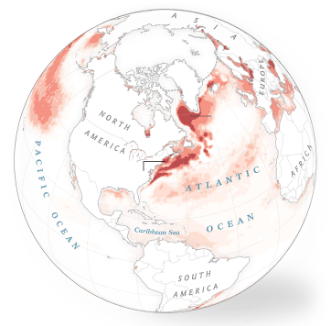
The enclosed shape causes the Gulf of Maine to absorb more heat from the atmosphere while also making it more difficult for warmer waters to exit the Gulf after entering from rivers or currents. The Gulf Stream is a current that runs from the Gulf of Mexico up the eastern coast. This current is strengthening, causing more warm water to flow into the Gulf of Maine. The Labrador Current brings cold water from the Arctic and circulates through the Gulf of Maine, and it is weakening, decreasing its effectiveness at cooling the Gulf of Maine.

Other effects of climate change on Cashes Ledge
Cashes Ledge is home to many environmentally and economically important species. It provides industries with shellfish, salmon, cod, algae, and more. Climate change and other anthropogenic effects are threatening the existence of this extremely important biodiversity hotspot.
Warming waters are not only causing a decline in the kelp forest, but bring red algae, an invasive species that takes over the ocean floor. This invasive species has negative consequences for the kelp and for the species that rely on the kelp forest for habitat protection, as well as those that live on the seafloor.

effect on the ocean floor in the Gulf of maine.
Species of fish and lobster that are important to New England’s cultural heritage and economy, including cod, salmon, and lobster, are also being threatened by warming waters. These key species are also vulnerable to the invasive species that come with the warmer temperatures. This is causing the composition of species to change, increasing the presence of invasive species. These changes not only affect the biodiversity of Cashes Ledge, but also the economy and livelihoods of local fishermen. Due to rising temperatures, species migration, and decline, it is becoming increasingly difficult for fishermen to fish for the species that they rely on to make a living.

Importance of Protection
Protecting Cashes Ledge is critical in order to preserve its biodiversity and build climate resilience in the Gulf of Maine and is extremely important for the habitat and the region’s well-being. Given its biodiversity and the ecosystem services it provides, Cashes Ledge deserves to be made a national marine sanctuary. This would help protect and save this important ecosystem for future generations.
Cashes Ledge is a location where valuable scientific research has been conducted, but there is still much more to learn about our oceans, its flora, and fauna. Protecting this ecosystem can offer the opportunity for research to continue and to investigate the impacts of anthropogenic climate change that can possibly provide valuable insights on what can be done to protect against its harmful effects.
About the Author: Maya Tabor is a junior studying marine biology and marine affairs at the University of Rhode Island. She is interested in learning more about how we can combat climate change and preserve these important and biodiverse marine ecosystems like Cashes Ledge. This summer (2025), she will be working as a microplastics research assistant for Five Gyres. She hopes to work in reducing plastic pollution and combating climate change.
This article was written for MAF/APG471_Sp25, I attest that I am the author of this article and have responsibly referenced my sources throughout the article. I have given Prof. Lloréns permission to publish it on her website.
 hildallorens.com